
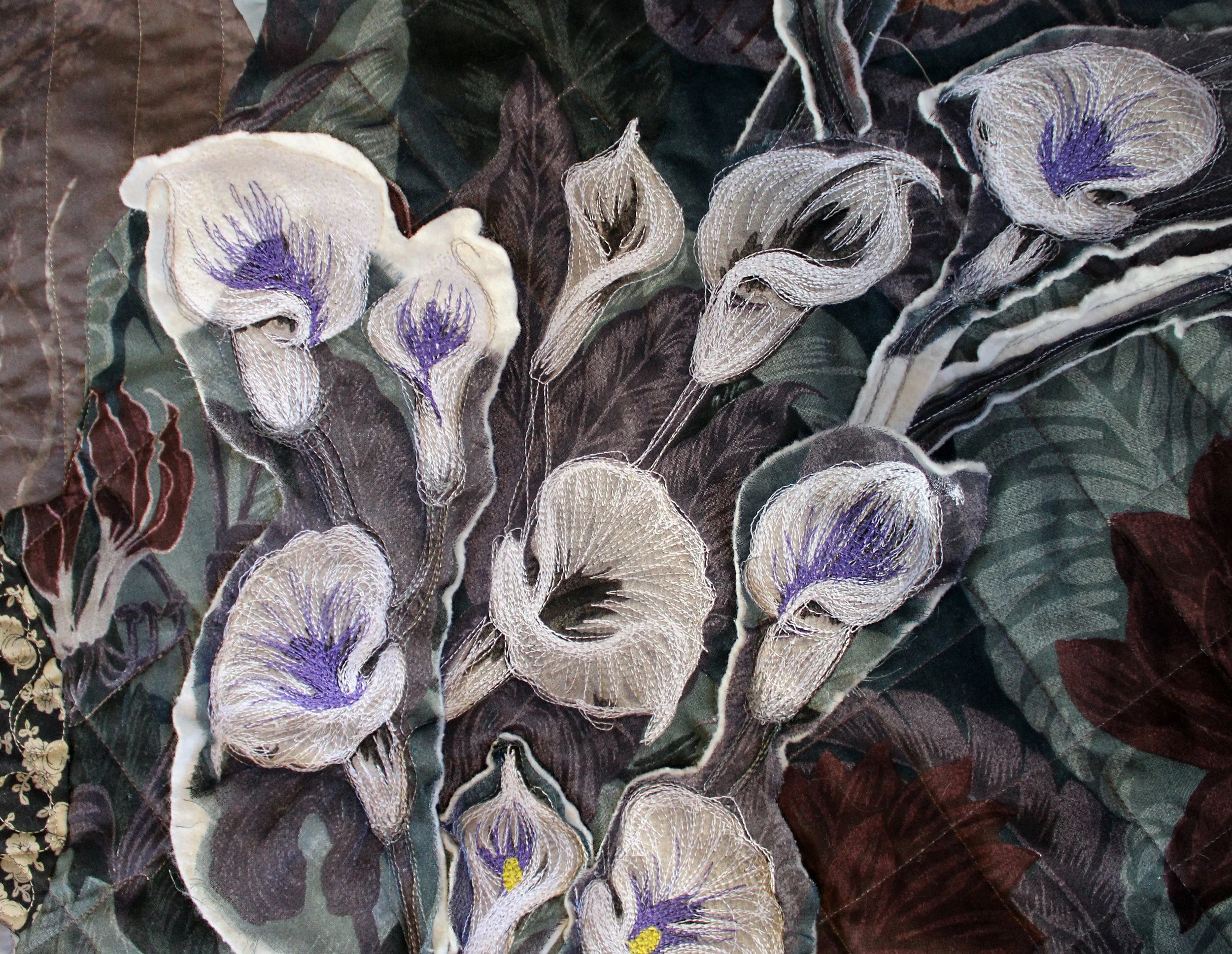




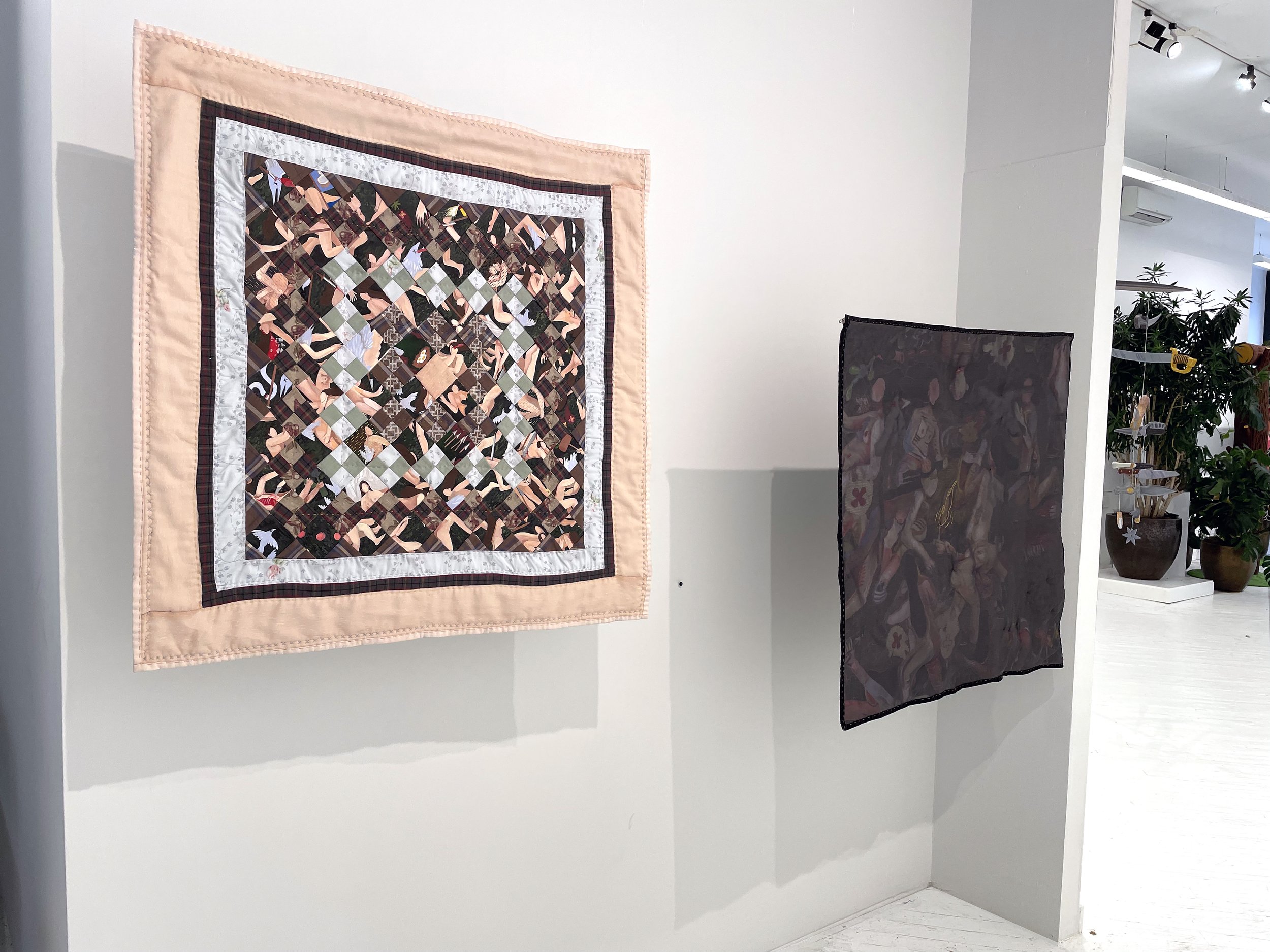
2026, Found fabrics, leather, aluminium barbs
Since the American Revolution, the Roman goddess Libertas has personified the nation’s ideals, embodying evolving definitions of freedom and belonging. The 1886 dedication of the Statue of Liberty, however, unfolded amid national conflict over the boundaries of liberty, including the end of Reconstruction, debates over immigration, and the rise of women’s suffrage. Drawing on archival research at the Historical Society of Pennsylvania, textile artist Viola Bordon examines “Lady Liberty” as a fragmented American icon. Her triptych Muliebrity, composed through appliqué and found textiles, invokes a distinctly feminine power grounded in endurance and embodied knowledge, prompting us to consider how figures of womanhood have been repeatedly mobilized to serve patriarchal institutions.
Artist talk with Viola Bordon & BA Harrington
Image Copyright 2026 Museum for Art in Wood, photo John Carlano, Special thanks to the Pennsylvania Historical Society and The Clay Studio
2026
Installation shot from Double Feature at the Ice Box in Philadelphia, 2021.
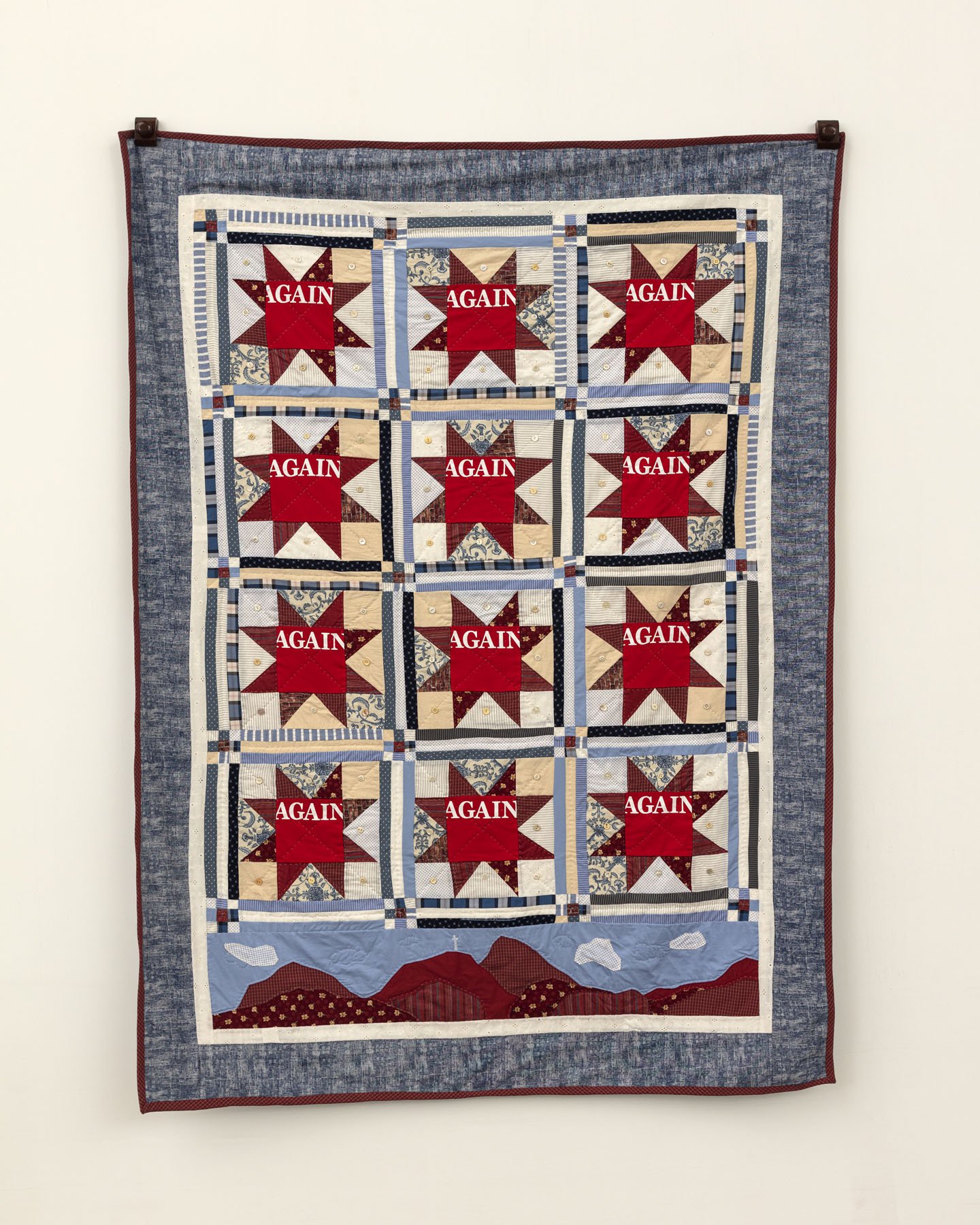
"Let's make America Great Again" was Ronald Reagan's campaign slogan in the 1980 election. This election was the first major triumph of the alliance between cultural evangelicals and the Republican party.
The Evangelical Industrial Complex that formed around many political-church leaders reflected systems of control, power, and oppression that hid under the guise of spirituality.
When reflecting on the church in the United States, it is hard to separate the political, commercial, cultural, and spiritual identities. Instead, we end up with systems of abuse that occur again, and again, and again...
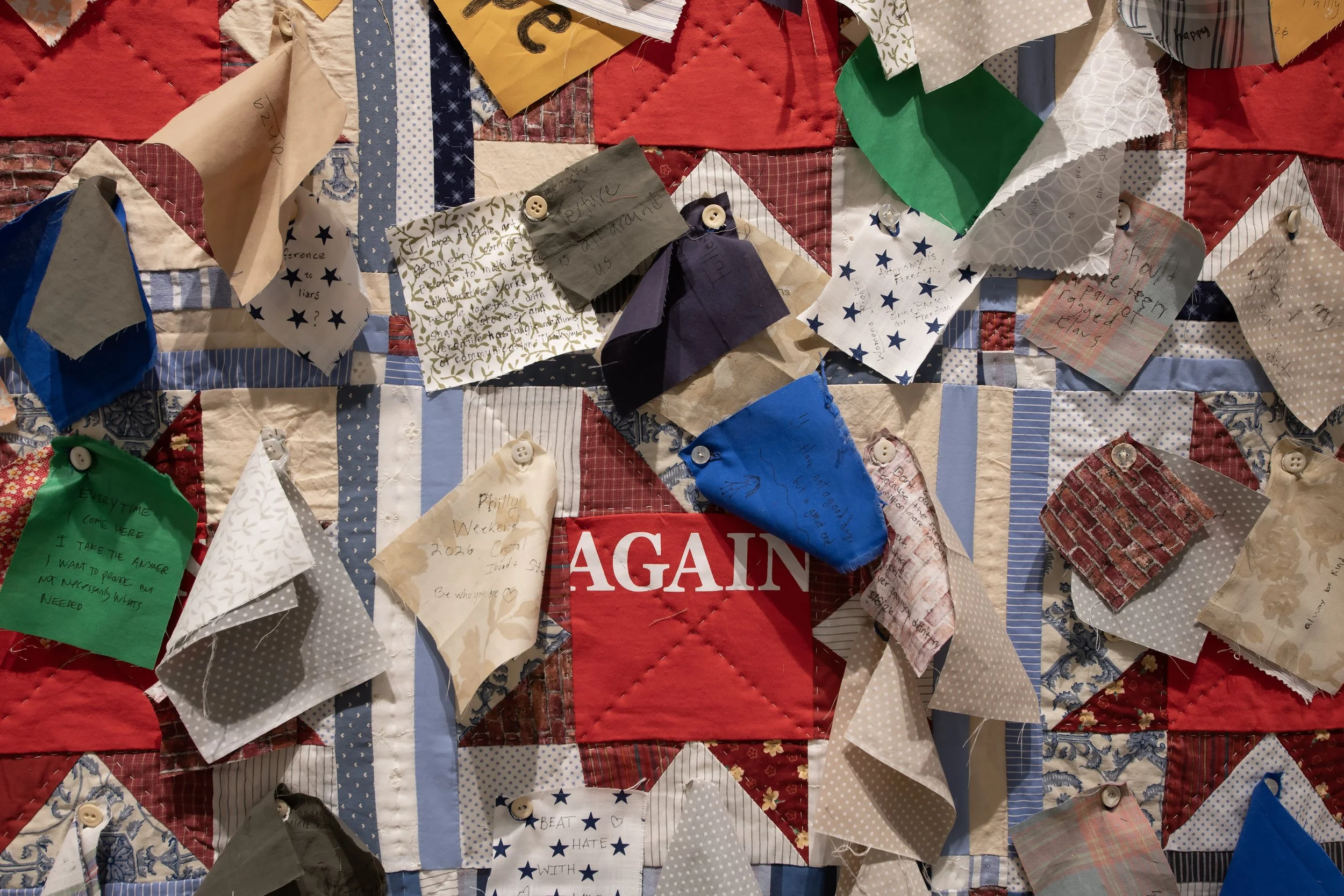
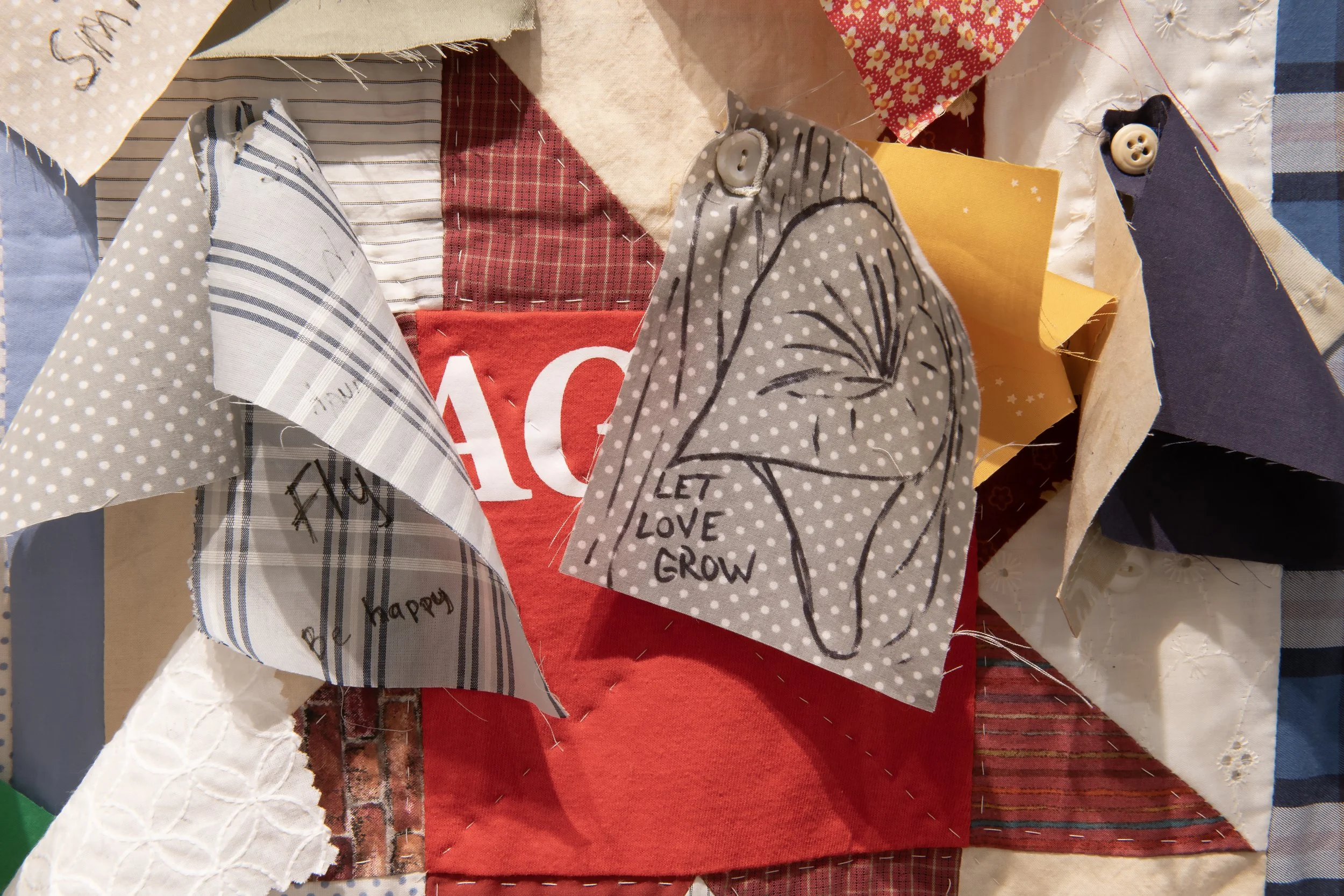
In the summer of 2026, this quilt was shown at the Museum for Art in Wood, where viewers were given this prompt.
This quilt is unfinished.
Take a scrap.
Look at the patterns around you.
Pause, reflect.
Write it.
Button it on.
2022, Hand-dyed fabric top, embroidery thread, found beads, steel infrastructure, synthetic batting.
Anti-sacrilege laws, enforced in France, required the death of anyone found guilty of sacrilege. This legislature ultimately led to the July Revolution, which ousted King Charles X. This quilt is based on "The Butcher," an Honoré Daumier print created after the revolution. The shift in contemporary relationships towards the idea of the sacred makes the sacrilege in this work almost invisible: the inverted pig's body on a cross.
2022, Hand-dyed fabric top, embroidery thread, found beads, steel infrastructure, synthetic batting
2022, Hand-dyed fabric top, embroidery thread, found beads, steel infrastructure, synthetic batting
2021, cotton quilt
The title refers to the number of saris that Mother Theresa's Sisters of Charity would own. The self-denial, vows of chastity and poverty came to define the women in this Catholic organization.
They began to wear white, the uniform of widows in India. The blue stripes on the bottom of their saris have since become incorporated into Catholic tradition in the region.
Mother Theresa herself embodied the position of virgin, mother, and widow simultaneously. Although she eventually became a saint, her position as a woman within Christianity and a foreign missionary in India is one of nuanced complexity to say the least.
2022, Hand and machine-embroidered cotton, scrap batting
The text in this work was taken from the document handed out at an evangelical marriage conference in 2005. The document presents “biblical” reasons why spouses should never sexually refuse each other. This teaching has been cited in the justification a large number of abuses.
2022, Hand and machine-embroidered cotton, scrap batting
2022, Hand and machine-embroidered cotton, scrap batting
2022, Hand and machine-embroidered cotton, scrap batting
2021, fabric, gouache, and embroidery
This work was made in collaboration with Kay Seohyung Lee.
2021, fabric, gouache, and embroidery
This work was created in collaboration with Kay Seohyung Lee.
Installation shot from Now and At The Hour at Hot Bed Philadelphia.